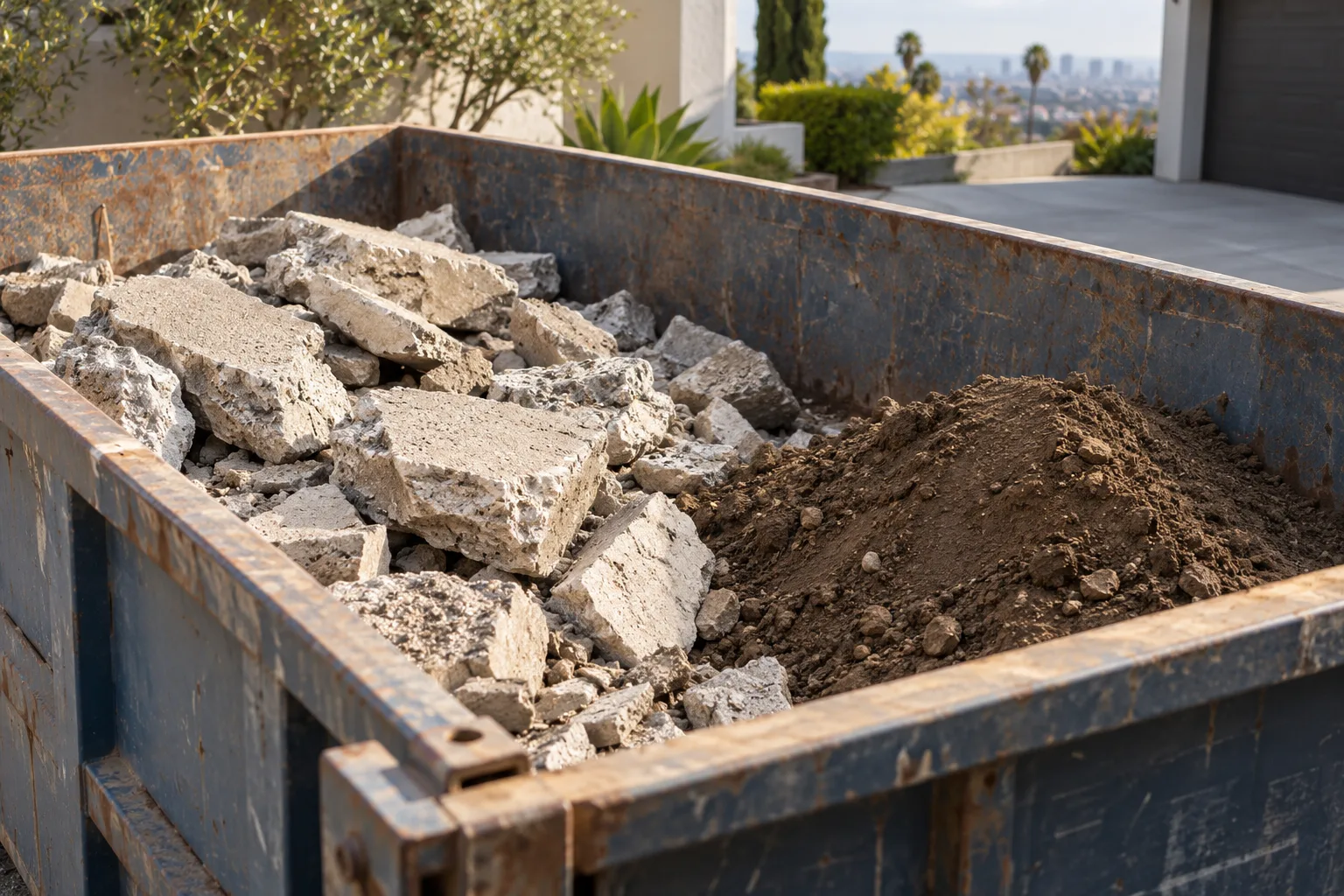
Weight-aware planning for clean concrete, soil, and inert material. The most useful preparation happens before anything is tossed: identify the material, protect the access route, and confirm the load rules for the job address.
Volume is a poor guide for heavy material
Concrete and soil can reach a safe transport weight while a container still looks partly empty. Give the project dimensions and material depth so the load can be discussed by material and estimated weight, not by appearance alone.
Keep clean material clean
Concrete, soil, brick, asphalt, and mixed construction debris may follow different facility rules. Do not add household trash, wood, bags, or unknown fill to a clean-material load unless the dispatcher approves the mix.
Describe the source of soil
Soil from an ordinary residential landscape is not the same as soil from an industrial site, fuel area, or location with a spill history. If contamination is possible, stop and seek testing or disposal guidance before loading.
Heavy-load checklist
Share the dimensions of the area being removed, material thickness, whether rebar is present, the loading equipment, driveway slope, and the truck approach. Confirm the container type and fill limit for that exact material before work begins.
Discuss your project
For a useful estimate conversation, have the material, address, access notes, and timing ready.
Review the related serviceCall (202) 555-0154