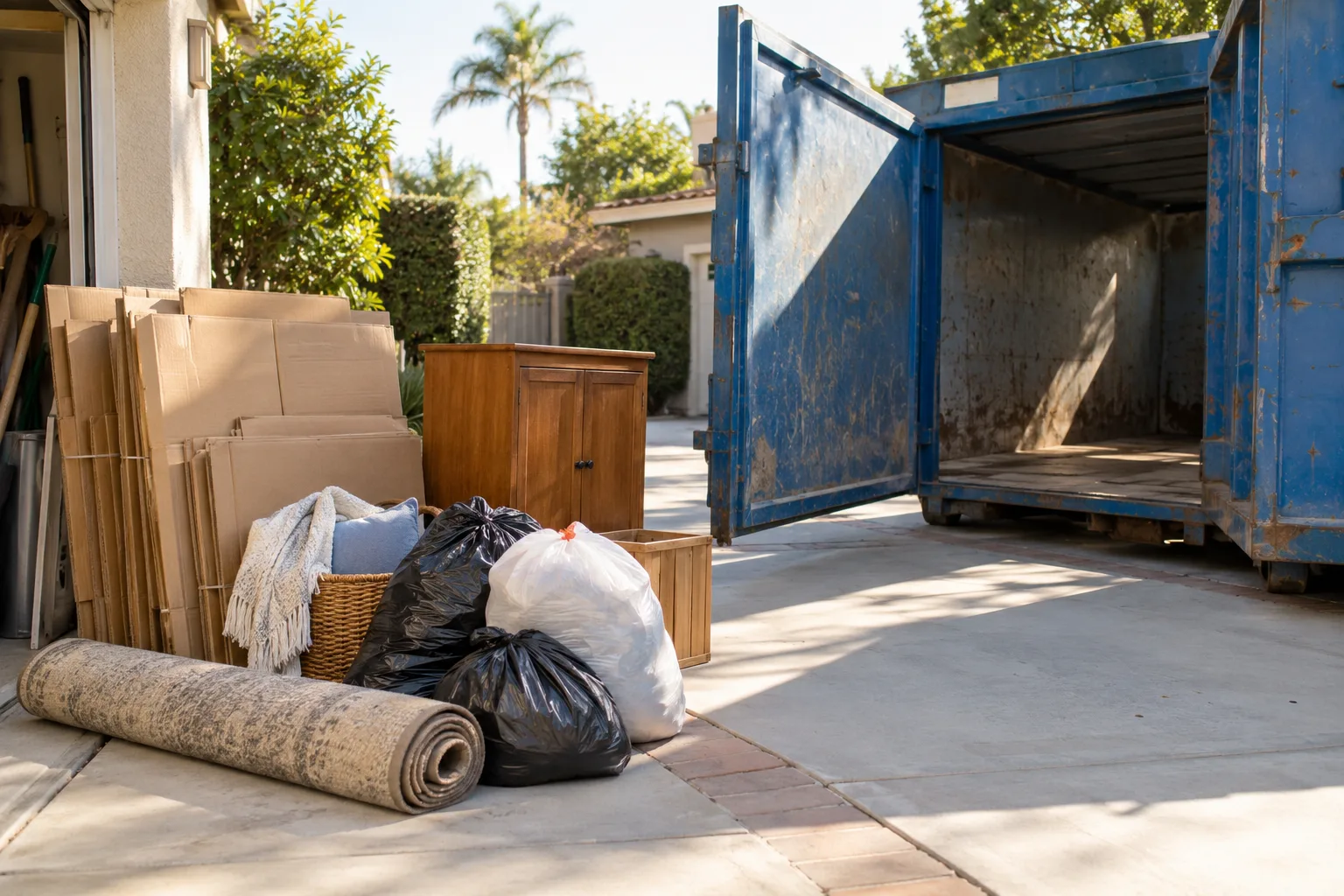
A container plan for home cleanouts, moves, and renovation debris. The most useful preparation happens before anything is tossed: identify the material, protect the access route, and confirm the load rules for the job address.
Start with the material, not the room
Walk through the cleanup once and group material by type: ordinary household contents, bulky furniture, renovation debris, electronics, paint or chemicals, and anything unusually heavy. A room-by-room list is useful, but the material list is what helps identify restrictions and quote factors. California bans batteries, electronics, paints, solvents, and other hazardous products from ordinary trash. Keep them out of the loading pile and use an approved collection option.
Measure the route the truck and the load will use
Note the driveway width, gate opening, overhead branches or wires, surface slope, and where parked cars will be moved. Then plan the walking route from the house to the container. A shorter, level route reduces repeated lifting and helps keep doors, sidewalks, and shared access clear.
Stage before you load
Flatten boxes, empty cabinets and drawers, and set aside items that need a separate disposal decision. Keep the area around the container door open. Load stable, flat material first and avoid leaving sharp pieces where someone will step. Do not load above the rim.
Cleanout call checklist
Have the address, main material types, largest items, access notes, preferred dates, and a rough volume ready. Mention stairs, elevators, gated access, parking restrictions, or a shared driveway. Ask which items require separate handling before delivery, not after the container is on site.
Discuss your project
For a useful estimate conversation, have the material, address, access notes, and timing ready.
Review the related serviceCall (202) 555-0154